PRODUCTS
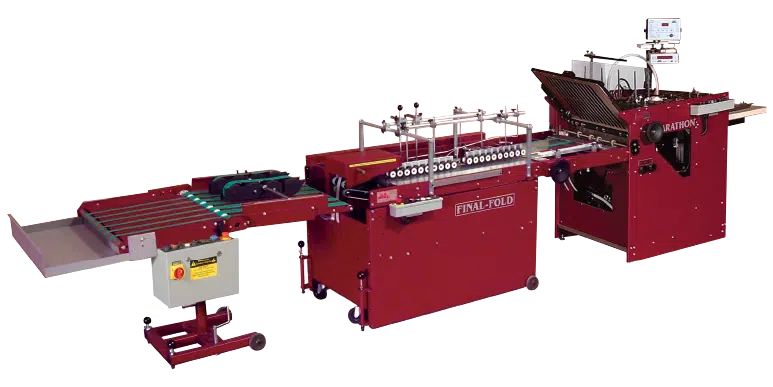
Folder/Gluers
Options for Folder/Gluers
Accessories
B&R MOLL offers competitive pricing and experienced service for parts and accessories for MOLL*, MBO*, Baumfolder*, ITW Dynatec* and other industry leading brands of folding and gluing equipment.

Articles


Using the Right Glue for the Right Application

Part 1 - Adherence


Today, trade finishers face the challenge of having to select
Glues
the most effective gluing product for a myriad of specific applications. This results in a constant balancing of pricing and the wide range of product effectiveness. Binderies must select the right glue after considering such factors as the intended end use of the product, the specified coatings or finishes, different types of paper stock, and storage condition. Given these factors, binders also must weigh the cost savings of using lower-priced glue against the possibility of performance failure in a specific application.

Adherence

Glues must be carefully selected to adhere to whatever coatings or finishes have been required by the bindery’s customers. To complicate that selection, the coatings and paper stock that have been used successfully with certain glues frequently change in composition, causing the glues to lose their effectiveness. A plethora of coatings – such as UV, aqueous, and standard varnishes – are constantly changing in composition due to the varying availability of certain chemicals. Some chemicals can no longer be used because of raw material availability, a situation that is out of the binder’s control. The use of different paper stocks, too, changes regularly. Paper stocks range from recyclable paper that is widely used in the printing and carton industries, to standard offset, cover weight stocks, and fluted carton material that are finding wide acceptance in direct mailers, brochures, and information packets. As a result, binderies must deal with a wide range of adhesion issues. For example, flood coating of paper is commonly used in applying certain coatings. This sometimes creates a problem for gluing because these coatings have high resistance to adhesion.

There are several effective ways to combat loss of adhesion. One is to block out the glue able area on the paper. This will create an opportunity for the glue to bypass the coating and adhere directly to the substrates below the coating. If using a block out is not an option, binders can add a glue assist to their existing dies or new dies at the time of die-making.


Part 2


Hot Melt Glue Versatility and Cold Glue Advantages - Section 1

Hot melt glues demonstrate their versatility by performing well in applications that have a wide range of temperatures. They provide excellent adhesion in situations where temperatures reach well over 100 degrees in shipping trailers, and where temperatures are below freezing in food packaging.

Hot melts work well on coated and uncoated paper stocks, but liquid glues also have performed satisfactorily on uncoated stocks.
 Glues must be carefully selected to adhere to whatever coatings or finishes have been required by the bindery's customers. To complicate that selection, the coatings and paper stock that have been used successfully with certain glues frequently change in composition, causing the glues to lose their effectiveness. 
However, cold glues have not performed satisfactorily on some coated stocks because of their inability to adequately penetrate these stocks. However, there are some cold glues that work on these stocks. Testing is important to determine what works best.

Hot melts not only offer excellent adhesion to numerous substrates, but also meet ‘machinability’ requirements. They can be applied with little or no stringing and requirements. They can be applied with little or no stringing and with a clean cut off. Hot melts are recognized as having superior ‘machinability’, reflecting their wide acceptance in high-speed carton and box gluing applications. Where dealing with difficult coating is an issue, hot melt glues are preferred.


Hot Melt Glue Versatility and Cold Glue Advantages - Section 2

Despite the predominance of hot melts in the market today, there are a number of important applications where cold glues are as effective in breaking through coatings and creating an excellent bond with the two substrates. These are applications in which longer drying times are required, such as cartons and pocket folders. What’s more, in these applications cold glues are more forgiving in the bonding process due to their ability to allow both boxes and sleeves to find their natural configurations. Because liquid glues are thinner in viscosity that hot melts, they are able to be applied more quickly. For this reason, cold glues get the nod over hot melts for use in long-run carton and box applications found in the printing and binding industries.

The ‘storageability’ of cold glues is on par with that of hot melts. Depending on the application, the coating, and the paper, cold glues are generally as effective as hot melts in temperature extremes that range from below freezing to 100 degrees plus.

There are several specialty hot melt adhesives that are finding important niches in the market place. One is a repositionable hot melt that is used in self-mailing applications where the end user can receive information and re-secure the product for other mailings.

Hot melt and liquid -cold glues can form another effective type of gluing product for binder managers to have at their disposal. These are known as ‘fugitive’ glues. Fugitive glues can be applied to a substrate – such as a folder, pockets, and standard bond paper – to which a binder can secure products such as credit cards, pharmaceutical inserts and information cards. At the same time, these glues allow removal of these products relatively smoothly, with no tearing, and without defacing the information found underneath the fugitive glue.

Cold glues used to be the recommended glue for fugitive applications. Now hot melts are regarded as the better choice because they are more durable during the handling and mailing processes.

Hot Melt Glue Versatility and Cold Glue Advantages - Section 3

Another form of specialty glue has been designed for remoistable applications: remoistable hot melts. These hot melts are used for straight-line envelopes that function as self-mailers. Frequently used in fulfillment programs, remoistables start out as hot melt glues, then change in composition after application to the paper. After the paper is dry, these glues become remoistable to secure the information inside the envelope.

Cost savings should not be the major consideration when deciding on glues for specific applications. Lower-priced glues may not perform well for a broad range of applications. At this time, trade finishers should ask their glue suppliers for recommendations on the use of a type of glue that will provide the required adherence.

Today, trade binders must meet the demanding, constantly changing, and time-sensitive requirements of their customers. To successfully and economically meet these customer needs, binders must rely on the expertise of their glue suppliers to provide the right glue for a host of applications. Binders must pick their glue suppliers carefully, seeking the guidance of only performance-proven glue experts, if they are to grow their businesses by maintaining current customers and adding new accounts. For astute trade binders, choosing a qualified glue expert is simply a matter of dollars and sense.


High-Tech Upgrades Help Profit-Focused Finishers Meet Customer Needs and Capture New Business

Part 1 - Technically Flexible and Multi-Dimensional


"Finishers that want to grow have to be increasingly technically flexible if they are to respond effectively to customer needs. Companies that don’t move in that direction soon lose their financial health and inevitably become as extinct as the dinosaurs."

That’s how Karen DeMaio, president of 21st Century Finishing, Inc., describes the importance to finishers of having a firm commitment to meeting customer requirements through continual upgrading of their technical capabilities. 21st Century Finishing, a diversified, high-end finishing company located in Saddlebrook, NJ, has implemented a tech upgrade program which has dramatically expanded its customer base and increased sales by approximately 70% in each of the past three years. The company has substantially grown its business with established customers, while also securing sizeable chunks of good business from add-on accounts. Last year more than 60 new customers came on board.

21st Century Finishing specializes in die-cutting, embossing, foil stamping, folding/gluing, automatic inserting, hot stamping, sheet and web forms and a range of other finishing operations for the pharmaceutical, cosmetics and packaging industries. The firm produces such diverse projects as book covers, checks and gift certificates, brochures, CD mailers, folding cartons, greeting cards, invitations and holograms. 21st Century Finishing has quickly evolved from a small shop with restricted capabilities to a well-respected major player in the highly-competitive finishing industry. Much of the company’s success is due to the customer-conscious, market-savvy leadership of its president, Karen DeMaio, as well as the 29 years of press and production expertise of James Ramirez, the firm’s Vice President of Operations.

Technically Flexible And Multi-Dimensional

"We started out as a small business and reasonably soon were able to achieve a reputation for being reliable and doing quality work,” states DeMaio. “However, our production capabilities were limited to finishing jackets, folders and basic cartons. To grow, we wanted to increase our capacity to include more diversified folding carton applications and develop capabilities to use hot glue systems and clean stick applications. To make the rapid progress we wanted, we knew we had to become more technically flexible and multi-dimensional, so we could keep up with the ever-changing needs of our current customers and capture significant business from new sources. Reducing turn-around time was particularly important. To achieve our goals, we established a program to expand, upgrade and diversify our technical operations. This program really has paid rich dividends for us."

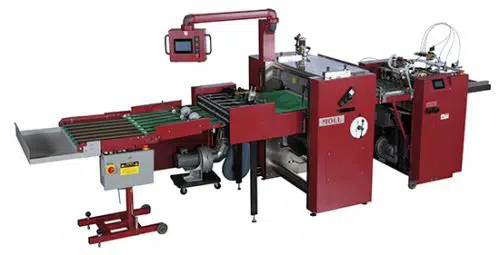
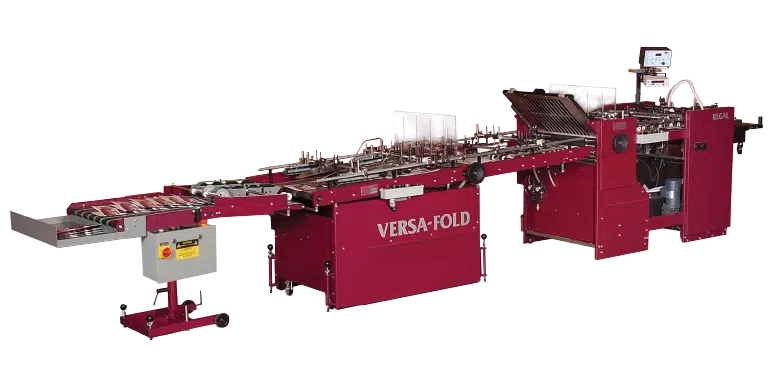
An early important step in 21st Century Finishing’s program was to retire its conventional folder/gluer, and install the innovatively designed REGAL® folder/gluer system, a product of B&R Moll, Inc., of Ivyland, PA. This system includes a primary pocket folding/gluing unit and a complementary, versatile folding unit that glues, forms pockets capable of changing product directions for secondary operations. The system is equipped with such features as one fold plate, a Tipper Plate offering exceptional versatility, built in sheet spacer and batch counter, and DC controls. This high-speed, extremely flexible system immediately allowed 21st Century Finishing to handle more varied, high-volume jobs and better meet customers’ demanding turn-around times. The firm now could take on such new projects as vertical/horizontal pockets and three–sided, reinforced pocket folders.

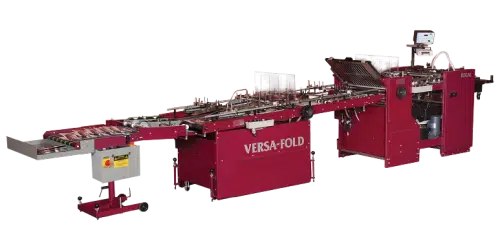
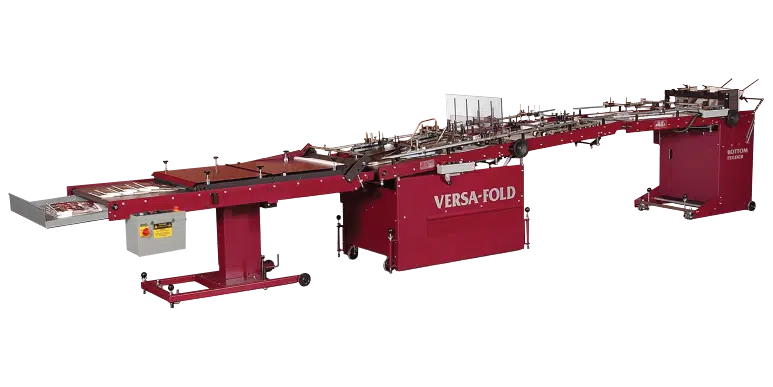
An important next step in the company’s tech upgrade program was to put into service a versatile, stand-alone, bottom friction feeder system. Designed and engineered by B&R Moll, this high-performance system features off-line folding and the ability to insert security tags; a four-line hot melt gluing system; and a double-sided tape applicator. The system also incorporates a multi-purpose conveying unit which allows for effective plowing, gluing and taping. The addition of the new equipment filled a gap in the firm’s line of technical capabilities and resulted in a jump-up in sales.


Part 2 - Competing for High-Profit Business


Competing For High-Profit Business

Our bottom friction feeder system was an important new element in our tech upgrade program, says DeMaio.  This system gives us a continuous feed, so we don’t have to stop to feed product. This, in turn, significantly shortens our turn- around time, which is really a ‘must’ for our customers who are very time-sensitive about product delivery. With the new bottom friction feeder system, we were able to pick up new business and become much more competitive in the market. For example, we are now much better equipped to compete for the high-profit cosmetics container applications. 

DeMaio quickly built upon her initial bottom friction feeder technology by adding a complementary technology that enabled her to grow her business in yet another direction. Installation of two MFT 350™ high-speed friction feeders provided the capability of inserting more than one item into various pieces, such as pocket folders, brochures and media kits. Made by Multifeeder™ Technology, of St. Paul, MN, the MFT 350 feeders are very reliable, user-friendly and help maximize uptime. They are powered by a high-speed, brushless servo motor with encoder feedback, and have infrared sensors which visually inspect product as it is fed. An on-board computer monitors and controls the entire process, providing accurate speed, product count, feeding jam/empty control and multiple product detection. The feeders’ innovative feeding mechanism assures that product integrity remains intact by gently separating product from the bottom of an inclined stack, regardless of the material’s consistency or thickness. B&R Moll is a regional dealer for Multifeeder Technology.

Quieter, Smoother Running, Longer-Lasting

With an eye to further expanding business, DeMaio developed a capability to do both automatic inserting and PI placement in pocket folders and brochures. She achieved this capability through use of the VANTAGE® 720 folder/gluer system, an in-line, folding box gluer with an impressive production capacity of 22,000 boxes per hour. A product of B&R Moll, the Vantage 720 system features an all-belt drive that is quieter, smoother running and longer-lasting than conventional gear- or chain-driven drives; stainless steel guides that eliminate marring and are more durable and easier to clean than conventional guides; and a Trombone delivery system that assures a very positive delivery into the stacking system

Another B&R Moll product that came on line at 21st Century Finishing as an important adjunct to the Vantage 720 system is a specialized pressure stacker that brought major performance benefits. This cutting-edge pressure stacker is designed for coatings that require the extra glue penetration time and positive control after folding. It features adjustable height intake alignment, DC speed controlled top and bottom drive, full-width motorized blankets, and adjustable pressure control.

"Our specialized pressure stacker really helps seal and solidify product before it reaches the delivery end of the process," comments DeMaio. "It' right on target for operations requiring an even amount of pressure on the product to keep it firmly in place throughout the delivery section."

Part 3 - Meeting Customer Needs, Increasing Billing Cycles


Meeting Customer Needs, Increasing Billing Cycles

One increasingly successful printer/finisher that has expanded its production capabilities, met challenging customer needs, and increased the frequency of its billing cycles through use of technical upgrades is Cooper Printing. The Fairfield, NJ, company specializes in printing and finishing packaging used by the pharmaceutical and electronics industries.

"We were under equipped to handle many of our production needs because our equipment didn’t have the versatility to handle the type of products coming off our 5- and 6-color presses," recalls Tom Cooper, president of Cooper Printing. "We could print this work but couldn’t finish it all in-house."

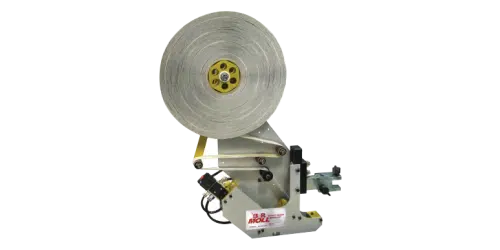
To strengthen its technical capabilities, Cooper Printing recently installed three major new systems which have achieved terrific results. The first two systems in place were the REGAL folder/gluer and the complementary bottom friction feeder system. The third system is the uniquely designed Label-Air® unit which works in conjunction with the bottom friction feeder system to provide remarkable insertion efficiencies. The three systems have enabled Cooper Printing to be much more responsive to customer needs. For example, a leading electronics manufacturer required that Cooper automate its basically hand operation of inserting theft-deterrent security tags in that customer’s product packaging.

Cooper Printing effectively complied with this request by use of the Label-Air unit which can insert up to three sensormatic tags per second for a running average of 8,000 tags per hour. In comparison, the former system could only insert 1,000-1,500 tags per hour with 50-60 workers taking part in the operation. This operation has greatly shortened the production schedules of the electronics manufacturer, enabling this customer to get its time-sensitive products more quickly into the marketplace. It also allowed Cooper Printing to speed up its billing cycle with this customer.

More Business At An Affordable Cost

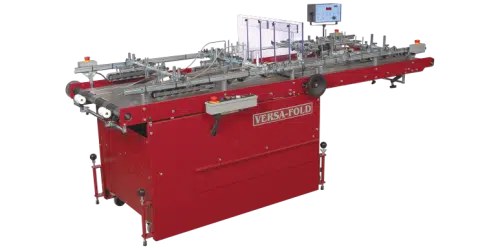
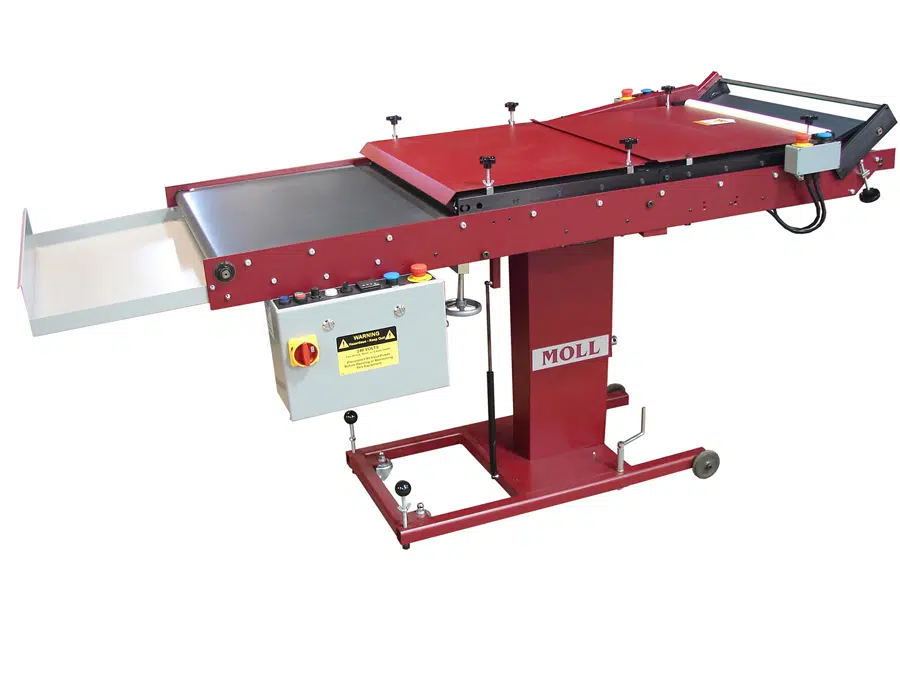
Even relatively modest technical upgrades are helping finishers gain important new business in a range of specialty applications. For instance, a multi-purpose, converting table recently developed by B&R Moll can be rolled behind conventional folder-gluer systems as an extension of this equipment. This economically-priced, compact unit allows finishers to convert products which formerly had to be run separately or in two passes, which was time-consuming and not cost/effective. The “converting” table allows finishers to be much more productive during a normal business day, with quicker turn-around time and more billable products, which substantially adds to their profit centers.

With only a little tweaking of existing equipment, the "converting" table permits finishers to branch out into high-profit markets that have traditionally taken products specifically geared for mail houses. Such operations as placement of credit cards and promotional products such as magnets, small coins and pharmaceutical inserts are examples of the efficiency-enhancing capabilities of this multi-purpose table.

A Matter Of Dollars And Sense  Providing sound, high-tech solutions to our customers' needs has become top priority with us," says Tom Cooper, president of Cooper Printing. "It helps us expand our business by becoming more useful to them and, of course, boost our sales. In so doing, we provide our customers with peace of mind, while saving them time and giving them more opportunities to secure new business. This makes for good business for everyone. Our focus on quality customer service by constantly improving our technical capabilities is simply a matter of dollars and sense."